
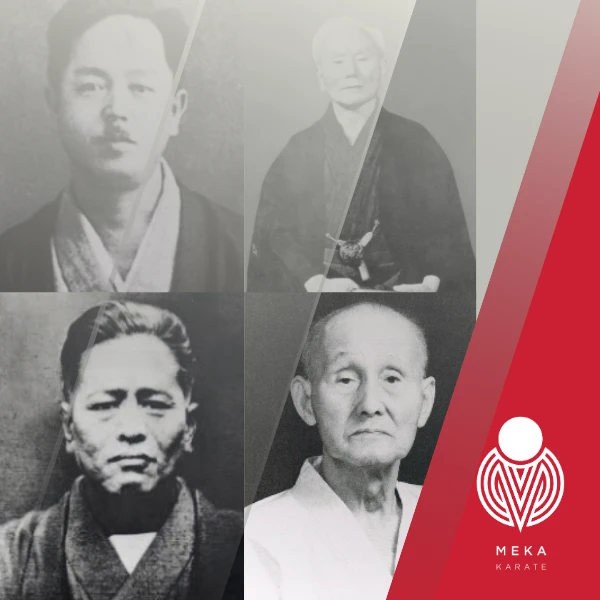
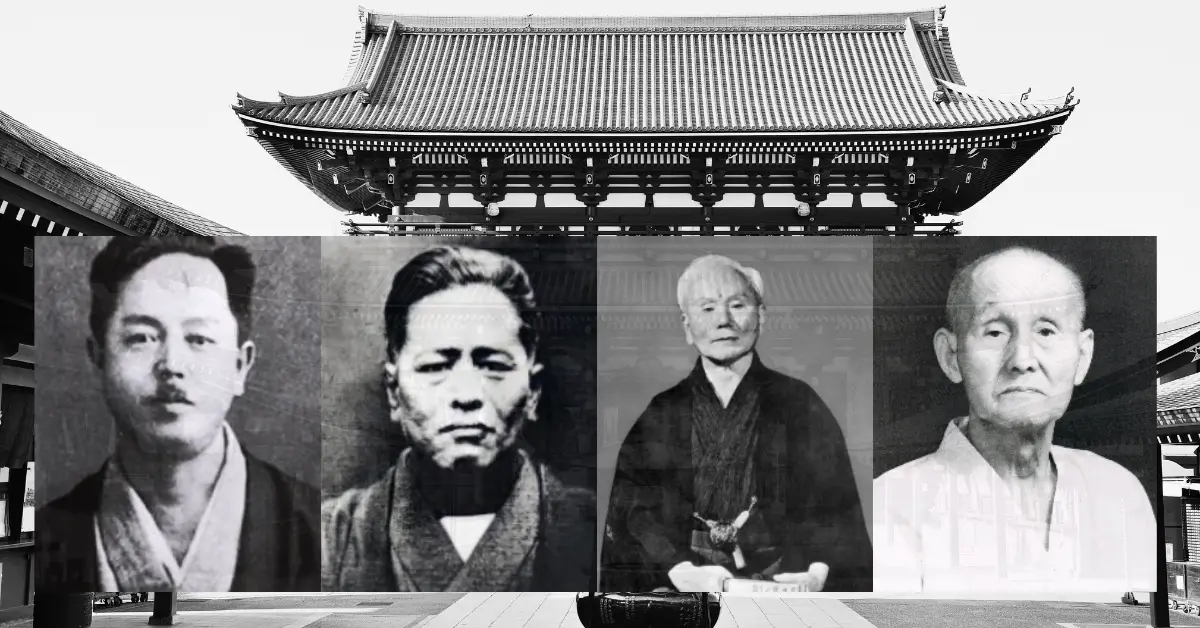
Karate began in Okinawa, Japan and has grown into one of the world’s most practised martial arts. Over time, many iconic karate masters have shaped its growth. I studied their stories to understand how they influenced both the physical and mental aspects of training.
Their dedication continues to impact students around the world. In this article, we explore how their contributions helped form the karate we know today.
Famous karate masters helped develop specific styles, philosophies, and techniques that laid the foundation for today’s martial arts.
In other words, the lessons your child learns at training often trace back to the wisdom of these historical figures.
Karate Master – Kenwa Mabuni – Shito Ryu Karate Style

Kenwa Mabuni created the Shito-ryu style. His approach blended techniques from Okinawan karate and Chinese martial arts. Mabuni placed great value on understanding the origin and meaning of each movement.
He collected and preserved many traditional kata to ensure future generations would not lose the roots of the art. In addition, he emphasised the importance of spiritual growth and mental focus in training.
Shito-ryu teaches students how to adapt using both quick strikes and fluid transitions. This balance helps children improve flexibility, timing and awareness. His son, Kenzo Mabuni, continues to share his legacy today.
Karate Master – Gichin Funakoshi – Shotokan Karate Style

Gichin Funakoshi is considered the father of modern karate. He introduced karate to mainland Japan and founded the Shotokan style. This form is known for strong stances, focused breathing, and powerful full-body techniques.
Funakoshi taught that karate should build character, not just self-defence skills. His students were expected to show humility and discipline. Similarly, he believed physical training and spiritual development must work together.
He stressed basic techniques, kata (forms), and repetitive practice. For instance, he believed a strong foundation in basics was key to progress. His teaching style made karate accessible to people of all ages and backgrounds.
Above all, Funakoshi helped spread karate beyond Japan. His son, Gigo Funakoshi, continued his work and played a vital role in refining Shotokan. Today, Shotokan is one of the most recognised styles worldwide.
Karate Master – Chojun Miyagi – Goju Ryu Karate Style

Chojun Miyagi founded Goju-ryu, a style that mixes hard and soft techniques. He focused on breathing, posture and rhythm in movement.
Goju-ryu teaches control through tension and relaxation. For instance, it combines forceful punches with smooth, circular blocks. This helps students develop both power and calm under pressure.
After that, Miyagi refined these ideas by studying Chinese martial arts and applying what worked best. His most famous student, Eiichi Miyazato, carried on the Goju-ryu tradition.
Today, Goju-ryu is widely taught across Australia and around the world. Its methods continue to build strength, discipline and focus in students of all levels.
Karate Master – Hironori Ohtsuka – Wado Ryu Karate Style

Hironori Ohtsuka created Wado-ryu, a style that blends karate with traditional jujutsu. This style focuses on using the body’s natural movements to avoid direct confrontation.
Rather than meeting force with force, Wado-ryu teaches fluidity and redirection. Ohtsuka encouraged students to stay relaxed and use timing instead of strength.
Similarly, he promoted training as a way to develop self-awareness and resilience. His teachings taught students to remain calm in challenging situations.
Wado-ryu remains a popular style today. Ohtsuka’s son, Jiro Ohtsuka, continues to teach his principles through schools worldwide.
The Principles and Benefits of Karate
Karate is built on discipline, respect and self-awareness. It includes techniques such as strikes, blocks, kicks and throws. These are designed to be effective while using the body’s natural motion.
In addition, karate promotes cardiovascular health, flexibility, and mental clarity. For instance, a child learning karate can improve their focus at school. It also helps build emotional strength through regular goal setting and practice.
Karate teaches that learning is a lifelong process. Above all, it reminds us that strength of character is just as important as physical skill.
A Brief History of Karate
Karate was first practised in Okinawa as a way for people to defend themselves without weapons. At the time, carrying weapons was banned. The people developed techniques using their hands, feet and simple tools.
Over the years, karate was influenced by Chinese martial arts. It was introduced to mainland Japan in the early 1900s. After that, it gained popularity and was spread around the world by passionate instructors.
Each master added their own philosophy and training method. This shaped the many styles practised in dojos today.
What This Means for Your Child
When your child learns karate, they connect to a tradition that spans generations. These legendary figures created styles that focus on growth, confidence and balance.
In conclusion, the impact of karate masters like Funakoshi, Mabuni, Miyagi and Ohtsuka can still be felt today. Their lessons continue to shape the way karate is taught and experienced around the world.
To learn more about how your child can benefit from these teachings, explore our programs.
